
Chances Are Good College Life Is Not About Exorbitant Money
For many families September can begin high-stakes college application processes. How a family decides to finance a student’s college experience will influence everyone’s life for decades. Parents take on debt. Or students themselves go into debt.
Yet what if we ask a counterintuitive question. Why does a vulnerable goal like investing practical organization to cultivate a comfortable education environment for your youth have to cost exorbitant money? A surprise approach to finding a college is to research leisure activity in proximity. A relaxed student is a curious one is a motivated one. Ice-cream anyone?
Peanut butter fudge ripple, malted milk chocolate, secret breakfast, Vietnamese coffee, matchadoodle, midnight express, SF fog, and honey graham are a few advanced choices. Serious ice cream selections for grownups, and everyone included, in a seating venue for 100 people or so. The name’s brand was a puzzler, too: Humphry Slocombe. Learning from a store’s sign I was how the name derives from two wildly popular characters on a British comedy “Are You Being Served?” (1972-1985). Adventuring to a place brand new always has these eccentric discoveries.
Next door to the ice cream pavilion is a virtuoso AMC Movie Theater where I saw a film qualifying as my least favorite. From my perspective on cinema credibility, any film has glimmers of potential and this one could be an exception. From the peculiar ice cream bonanza to a winner for worst movie made, I knew my inner-eclectic she was tapping a few jazzy steps all during the long pavilion walk. Tap dancing through three blocks devoted to mixed-use creative building spaces: residences upper level and diverse shopping street level in Bay Street Emeryville Plaza.
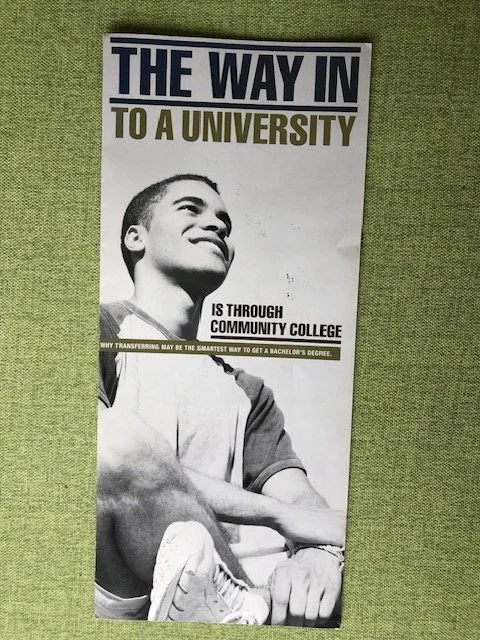
Over time cultivating a yen for newly lived surroundings reminds me that formal education like earning a college degree often progresses when chances are good for leisure activity. Getting to know which movies are popular with yourself—and which not—plus courage to venture into ice cream decision making is integral for new college students making a strike into a new life. Community colleges are a modern, unexpected diamond in an arena of prestige university life costing exorbitant finances and culturally difficult to access leisurely.
Before arriving newly to unknown Bay Street Emeryville Plaza, a few hours earlier my high school sophomore son Darien and I had sauntered through terrain where streams ran clearly under stylized walkable bridges, trees pruned short thrived while historically tall ones rooted adjacent. Everywhere green plantings flourish in healthy growth alongside paved, quiet walking pathways. The place seemed like a public park where I could stroll for a while, bring a back pack foodie-filled to enjoy a rest on a bench, and read an intriguing book if I chose. Interspersed in this park atmosphere are tall brick buildings, official names inscribed way up high: Psychology, Sociology, Biology, and Engineering were a few our family saw last summer June 2026.
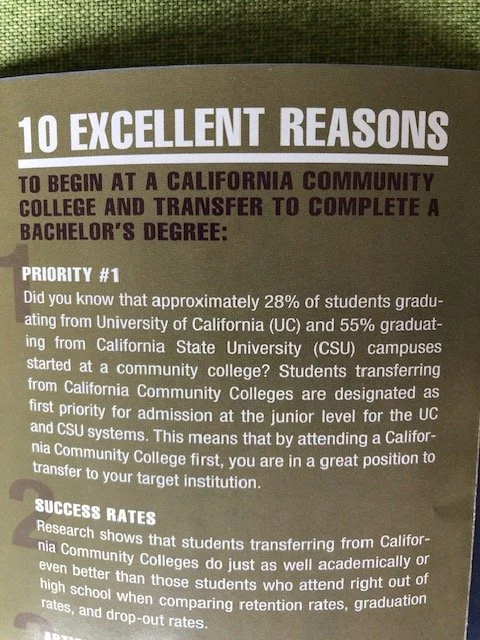
Where I was standing is University of California at Berkeley having walked a few blocks over from Berkeley City College. After any student has been attending for two years at BCC the changeover to earn a degree from UC Berkeley is smoothly possible. Achieving a welcome admissions letter from BCC requires graduating high school. (Yes, other paperwork and yet essentially this.) Surprises discovered touring the Bay Street Emeryville Plaza, a brief drive from BCC/UC Berkeley, are simply one example how focusing on how to finance high-stakes academics is not the point. What will life look like for your student on a day-to-day relaxed level?
General education classes are where a young person’s (and any age) world view has a chance for radical, expansive curiosity. Having ample time—meaning practical support like a budget, housing, healthcare, vehicle has been organized—to explore how one thinks about the world influences the rest of a life. Four years have lifelong healthy impact. While researching BCC’s website online, Darien found Music classes. Music 15A and Music 15B involve two semesters, an entire September through May year, to explore all facets of American music. Never playing an instrument or being in a band or having an interest to go there does not preclude acquiring knowledge on what music is. And who knows? A curiosity can take root—through four years devoted to depth learning—in so many unexpected ways.
Universities are institutions and many in America institutionalize admissions bias. Certain students are allowed in while others are kept out. Mechanics in this effort are test scores, flawless GPA, interviews, internships, athletics, letters of recommendation and much more. But seeking how to know better your own critical thinking dynamics—how your mind perceives, changes, opens, biases, filters and grows—is not a competitive, career resilient, opportunistic pursuit. A mind well-grown is a soulful spirit looking at a problematic world and asking what is my role?
Admissions to this endeavor is well-met at community colleges who ask of a student, be persistent for we have prepared your arrival. Not we have institutionalized biased admissions rigmaroles. Rather, give this all you have and we will meet you there in a learning classroom called excellence. The quality of a university experience is not where a student has attended but how well-attended was the college experience.
Learning a new city’s culture, learning a new classroom’s culture, and learning a new finance vision are courageous acts. Even for parents who began a college savings account when a child was born, and for families who have organized college finances in diverse ways over the years, the poignant question requires honesty: why spend an exorbitant amount? Suze Orman, an action expert on finance health, describes in Women and Money (2018) how families debilitate themselves.
She relates countless real-life anecdotes she has been listening to for years detailing how a college education places a family in stressful financial debt. When the family’s student learns after graduation the reality of how college was paid, a question is asked. The student inquires, “Why didn’t you tell me?” Being deeply vulnerable about college processes is a modern call-to-action for our lives. Orman emphasizes how vital beginning a college conversation is early in high school. September is a great month she suggests—in a student’s 9th grade year. Lightly planning four years to cultivate the next four years in your student’s college experience life.
Let’s invest healthily in our lives so when a family sends a student to college an arrival is into a supportive living culture. And after four years the financial cost has been entirely paid in full (or minimal leftover). A thriving college student is one of many participating in a vibrant community. A new student starting a new life grows so well when circles of mentors have made attempts to research a supportive culture: diverse, creative, spiritual, and open-minded. Encourages what appears impossible to be possible after all. Berkeley City College exemplifies one of many community college locations welcoming to new students, possibly yours—chances are good.
Note: Recently purchased a new ceramic cup at a local thrift store. And a book exploring LGBTQ experience in Hawaiian history has a delivery arrival in ten days. One essay at a time a writer writes and a reader reads any ol’ damn time she wishes.

Bringing a ceramic cup wherever I go during a day helps me be mindful.